
Saddle Stitch
Binding Services
Saddle Stitch Book
Turn your report or booklet into a professionally finished book using our saddle stitch binding — delivering high‑quality results, expert guidance, and a wide choice of styles and finishes.
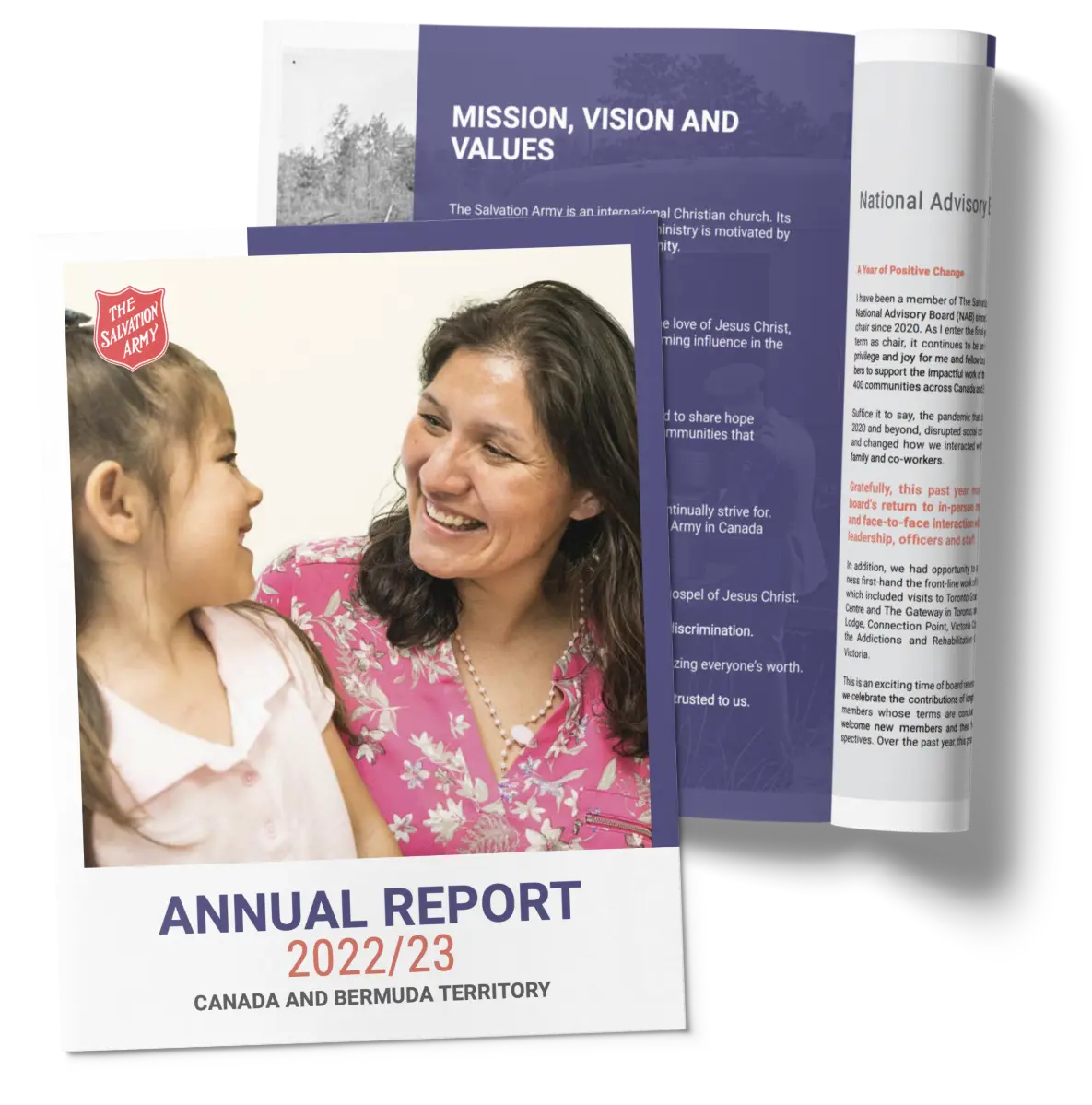
about the binding Process
What is a Saddle Stitch Book?
A saddle stitch book refers to a type of binding method commonly used for small booklets, brochures, magazines, and pamphlets. The term “saddle stitch” comes from the way the pages are arranged and secured together.
Here’s how the saddle stitch binding process works:
- Folding: The pages of the book are printed and folded in half, creating a series of double-sided sheets or signatures. These pages typically begin as flat 17 x 11 inches and when folded/nested together, end up as a 8.5 x 11 inches book.
- Collating: The folded signatures are then collated in the correct order, ensuring that the pages are arranged sequentially.
- Stitching: The collated signatures are placed over a saddle-shaped apparatus, which supports the center of the book. Staples or stitches are inserted through the fold line of the booklet, piercing all the pages. The ends of the staples or stitches are clinched in the interior of the booklet, securing the pages together.
- Trimming: Once the stitching is complete, the excess edges of the pages are trimmed to provide a clean, finished appearance.
Saddle stitch binding is a relatively quick and cost-effective method for producing booklets and other short publications. It is suitable for materials with a relatively low page count, typically ranging from a few pages to around 64 pages, depending on the paper thickness. However, the pages need to be in multiples of four to maintain proper collation.
Is this option appropriate for my book
Why Choose Saddle Stitch?
There are several reasons to choose saddle stitch printing for your publication:
- Cost-effective: Saddle stitch binding is a cost-effective method compared to other binding options, especially for small to medium-sized booklets or publications. The process is relatively simple and requires fewer materials, making it an economical choice for shorter print runs.
- Quick turnaround: Saddle stitch binding is a relatively fast binding method. The process involves folding, collating, stitching, and trimming, which can be done efficiently and quickly. This makes it an ideal option when you need your printed materials in a short timeframe.
- Versatile and compact: Saddle stitch binding can accommodate a variety of paper sizes and thicknesses, allowing for versatility in design. Additionally, the final product is compact and easy to handle, making it convenient for distribution, mailing, or carrying around.
- Suitable for low page counts: Saddle stitch binding works best for booklets with a low to moderate page count, typically ranging from a few pages to around 64 pages, depending on the paper thickness. If your publication falls within this range, saddle stitch binding provides a clean and professional look.
- Expert Guidance & Ease: Print your Books is quality printing and binding, not just convenience. Customers get expert guidance from the team — helping you choose binding, paper, finishes.
Things to remember
What you Need to Know.
It’s worth noting that saddle stitch binding does have some limitations. It may not be suitable for publications with a very high page count or those that require a more robust and durable binding method. In such cases, alternative binding options like perfect bound printing or coil bound may be more appropriate.
The final result of a saddle stitch book has a visible center crease where the staples or stitches are located. Therefore there is no spine, making it easy to read and handle.
Set yourself up Right
Set yourself up Right
What file do I supply? Today, most files are supplied as a PDF, alongside the native InDesign files. To set up your design files for saddle stitch binding, you’ll need to consider a few key factors:
- Page count: Determine the total number of pages in your booklet. Keep in mind that the page count should be in multiples of four, as each sheet will be folded in half to create four pages.
- Page order: Organize your pages in the correct reading order. For example, the first page should be the cover, followed by the inside front cover, inside back cover, and finally the back cover. The remaining pages should follow a sequential order.
- Bleed and margins: Set up your document with appropriate bleed and margins. Bleed refers to the area beyond the final trim size where any images or elements extend to prevent white borders after trimming. A standard bleed size is typically 0.125 inches (3 mm). Ensure that important content, such as text or images, is within the safe margin to avoid any trimming issues.
- Page size: Determine the final trim size of your booklet. 8.5 x 11 inches is the common size. Ensure that your document is set to the correct dimensions.
- Folding orientation: Design your pages with the understanding that they will be folded in half. Pay attention to the orientation of your content to ensure it reads correctly after folding. For example, if you have a landscape-oriented image, make sure it is positioned correctly to appear as intended when the booklet is folded.
- Pagination: Depending on your design software, set up the appropriate pagination to ensure that the pages are arranged correctly in the final print file.
- Staple position: If you have specific requirements for the staple position, such as avoiding important content near the centerfold, be sure to indicate this clearly in your design or communicate it to your printer.
- Proofing: Before sending your files for printing, it’s crucial to thoroughly proofread your content and review the layout to ensure everything is accurate and in the desired order.
It’s advisable to consult with our production team for any specific guidelines or templates we may have for setting up saddle stitch booklets. Print Your Books can provide you with precise instructions based on the printing equipment and processes.
Cost-Effective
Printing
Our book printing services in Canada combine competitive pricing with professional results. Whether printing a small booklet or a large hardcover volume, Print Your Books ensures quality at every step.
Large & Small
Scale Projects
From limited editions to large print runs, we handle every project with care and precision. Our book printing services ensure every copy is inspected to meet our high standards.
Hassle Free
Coordination
Our hands-on approach to commercial printing services means we guide you through every stage: paper selection, binding options, finishing, proofing, and delivery. Print Your Books ensures your project is seamless and professional.
Our top 6 features
What to consider when printing your saddle stitch book.
It is important to review your options and prepare your book properly for print. The type of book, orientation, page count, colour and/or black and white, and sustainable paper stocks are amoung the things to consider.
Firstly, choose your desired binding option such as perfect binding or hardcover based on your budget, quantity, and quality requirements. Paper type and weight influence the book’s feel and durability, so select them thoughtfully.
Choose the final colour and cover coating, while ensuring proper formatting and proofreading are in place to eliminate errors. Speak with our trusted professionals that can guide you through the process and options.
Book Orientation
Paper Type
Select a matte or silk finish for your paper type, or request a speciality paper.
Page Count
Outline the numbers of pages (each page in your pdf or each side of a sheet of paper). Blank pages are counted.
Colour
Coating & Binding
Consider the options for the cover lamination: coated gloss, silk or matte or coil binding.
Saddle Stitch Price Comparison
Saddle stitch book printing is a cost effective printing method recommended for brochures, catalogues, magazines and publications. The cost can vary depending on the specifications and quantity needed. For a custom quote, click here to fill out the form and we will be happy to provide you with an estimate.
250 Saddle Stitch Books
$895
 # of Pages: 32 + Cover
Size: Standard 8.5 x 11
Cover Stock: Full Colour .012
Paper Stock: 70 lb Glossy or Matte
Colour: Black/White Interior
Shipping: Low Weight
Turnaround: 5 Business Days
$1,330
# of Pages: 32 + Cover
Size: Standard 8.5 x 11
Cover Stock: Full Colour .012
Paper Stock: 70 lb Glossy or Matte
Colour: Full Colour
Shipping: Low Weight
Turnaround: 5 Business Days
1000 Saddle Stitch Books
$2,990
# of Pages: 32 + Cover
Size: Standard 8.5 x 11
Cover Stock: Full Colour .012
Paper Stock: 70 lb Glossy or Matte
Colour: Black/White Interior
Shipping: Medium Weight
Turnaround: 5 Business Days
$3,485
# of Pages: 32 + Cover
Size: Standard 8.5 x 11
Cover Stock: Full Colour .012
Paper Stock: 70 lb Glossy or Matte
Colour: Full Colour
Shipping: Medium Weight
Turnaround: 5 Business Days
5000 Saddle Stitch Books
$8,675
# of Pages: 32 + Cover
Size: Standard 8.5 x 11
Cover Stock: Full Colour .012
Paper Stock: 70 lb Glossy or Matte
Colour: Black/White Interior
Shipping: High Weight
Turnaround: 10 Business Days
$9,365
# of Pages: 32 + Cover
Size: Standard 8.5 x 11
Cover Stock: Full Colour .012
Paper Stock: 70 lb Glossy or Matte
Colour: Full Colour
Shipping: High Weight
Turnaround: 10 Business Days
Note: Costs are estimated in Canadian Dollars. All estimates are for budget planning purposes only, final costs will be updated to reflect changed specifications once quoted on. Turnaround time is based on final print proof approvals. Courier charges and taxes are not included. For clients in the United States, all books are shipped from Canada, no Canadian taxes will apply.
Mirian Moreno, Metals Focus
They listen to my needs and provide solutions meeting all of the deliverables I put before them. Honesty and integrity in all dealings with them has kept me as a loyal customer.
Bert Steenburgh, Executive Coaching
Neil Phillips, DGN Marketing Services Ltd.
Geoffrey Johnson, EnVille
Get the assistance you need
Looking for help with your custom saddle stitch book?
Leave it to us to determine the best printing method, book style, paper quality and setup for your unique book.
Our commercial printing services focus on precision, durability, and elegance, producing consistent high-quality results. And our experts are happy to help and suggest a variety of options for your next catalogue, annual report, magazine or booklet.
- Colour & Black / White Printing
- Variety of Paper Choices
- Competitive Pricing
- Quick Turn Around
Work with an Expert Today
We’re happy to provide a tailored estimate for your coil binding print project. Please provide us with contact information and details about on your book. Every quotation includes a fully printed, bound book as a pre-press proof for review before final printing.
Frequently Asked Questions
Print Your Books says saddle stitch binding is a method where printed sheets are folded, nested, and stapled through the spine fold — ideal for booklets, brochures, magazines, catalogs, or other short‑to‑mid length publications.
Because saddle stitch binding involves folding and stapling, page counts must be in multiples of 4 (e.g., 8, 12, 16, 20, etc.). From our experience and to maintain a neat, durable finish, we recommend keeping the total page count modest — typically under ~ 60–80 pages depending on paper weight.
Yes. Print Your Books recommends selecting from a variety of paper stocks (text or heavier), cover stock, and finishes (matte, glossy, soft‑touch, coated/uncoated), and we’ll help guide you to the best combination for your content and budget.
Yes. One advantage of saddle stitch binding is that booklets tend to open and lie relatively flat — great for reading, manuals, guides, brochures, or anything where ease of use matters.
Because saddle stitch binding is a simple and efficient binding process (folding, stapling, trimming), it offers one of the fastest turnaround times among binding methods. Print Your Books aims to deliver high‑quality shelf‑ready booklets with speed — without sacrificing craftsmanship.
Alternative Types of Book Printing
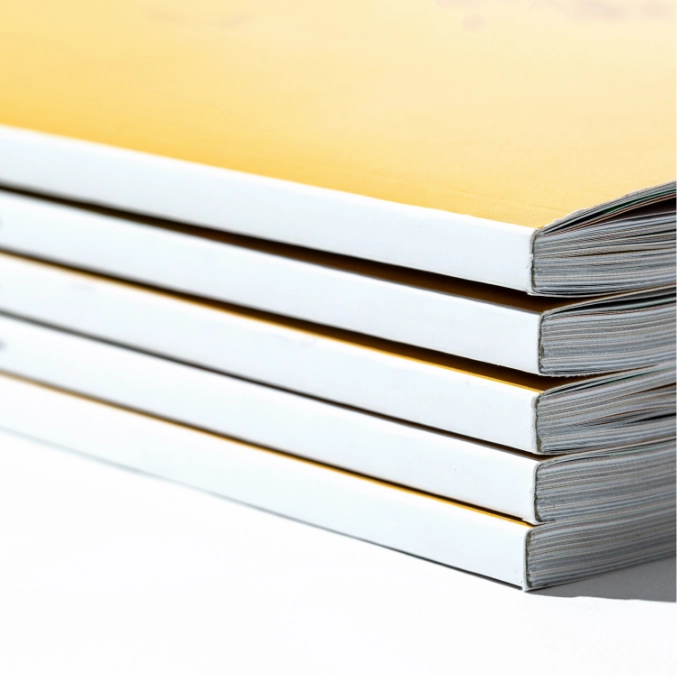
Perfect Binding
The perfect high-end feel to your corporate catalogue.
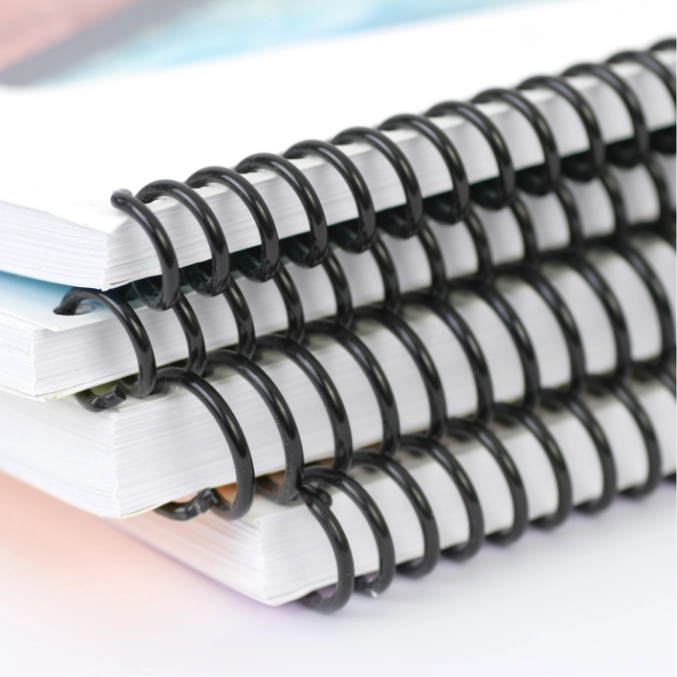
Coil Binding
Looking for book flexibility? Coil Bound is what you need.